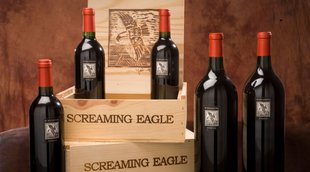
Screaming Eagle, Napa Valley: Cult Status, 10 Majestic Wines, Prices 2026
Quick Answer: Screaming Eagle is Napa Valley's defining cult Cabernet Sauvignon, produced in tiny quantities (400–800 cases a year) from a single Oakville estate. Recent vintages trade at $2,500–$4,500 per bottle on the secondary market, with 100-point vintages commanding $5,000–$15,000+. The mailing list — the only way to buy direct — has been closed to new members since 2000.
Screaming Eagle turned into a sensation almost overnight in the early 1990s and has held cult status ever since. Owning a bottle is the stuff of dreams for many wine collectors, and a smart move for those who can get one. This guide covers what makes the brand so sought-after, current 2026 pricing, the best vintages, and the easiest way to add Screaming Eagle to a collection through Vinovest.
Further reading
- Check out the 15 Napa Valley Cult Wines worth adding to your collection.
- If you're considering investing in wine, don't miss this guide covering The Smartest Way to Invest in Wine.
A Quick Introduction to Screaming Eagle
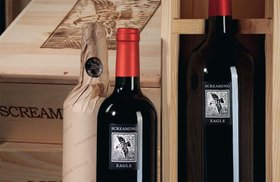
Screaming Eagle is a Napa Valley winery on the north coast of California that began making wine in the 1990s; its first Cabernet Sauvignon vintage released in 1992. The estate produces three wines in limited quantities:
- Screaming Eagle Cabernet Sauvignon — the flagship "cult Cab," blended with a small amount of Merlot and Cabernet Franc. Roughly 400–800 cases produced annually.
- The Flight — a proprietary Merlot-Cabernet Sauvignon blend, the estate's second wine.
- Sauvignon Blanc — a small-production single-varietal white, often trading even higher than the flagship Cabernet on the secondary market.
The Story of Screaming Eagle's Cult Status
In 1986, real estate agents Jean Phillips and Tony Bowden bought a 57-acre Oakville vineyard planted with mixed grape varieties. Phillips initially sold the fruit to other Napa winemakers, but after the Robert Mondavi team recognized the vineyard's potential for exceptional Cabernet Sauvignon, she connected with consultant Richard Peterson and his daughter, winemaker Heidi Peterson Barrett.
Together they released the 1992 vintage, which received a near-perfect 99-point score from critic Robert Parker — and catapulted the estate to fame. At the 2000 Auction Napa Valley, a 6-liter Imperial bottle of the 1992 vintage sold for $500,000, signaling that American cult Cabernet could compete with the world's best on pure collector demand.
In 2006, Stan Kroenke and Charles Banks bought the estate from Phillips; Kroenke has held sole ownership since 2009. He also owns the LA Rams, Arsenal FC, and Burgundy's Domaine Bonneau du Martray. The estate's winemakers today are Nick Gislason and Robert Black, with Michel Rolland consulting.
Current Screaming Eagle Pricing (2026)
| Wine |
Typical Price | Notes |
|---|---|---|
| Cabernet Sauvignon, recent vintages | $2,500–$4,500 |
Secondary market; Wine-Searcher average across vintages runs $3,500–$4,000 |
|
Cabernet Sauvignon, 100-point vintages (1997, 2007, 2010, 2012, 2018) | $5,000–$15,000+ | Strongest premiums and most competitive bidding |
| Sauvignon Blanc | $4,500–$7,500 |
Frequently trades higher than the flagship Cabernet due to tiny production |
| The Flight (second wine) | $900–$1,200 | More accessible entry point into the estate |
Worth noting for investors: Screaming Eagle's market has cooled somewhat since its 2022 peak, with US cult wines broadly under pressure amid softer demand and tariff-related headwinds. Average trade prices fell across most vintages in 2025 even as trading volume held up — a reminder that even blue-chip cult wines move in cycles, not straight lines.
Why Is Screaming Eagle So Expensive?
- Tiny production: Output is capped under 800 cases a year across all three wines from a single 57-acre estate, with strict selection meaning only a fraction of fruit makes the final blend.
- Closed mailing list: Direct purchase requires mailing list access, which has been closed to new members since 2000 — making the secondary market the only realistic acquisition route for most buyers.
- Critical acclaim: Six perfect 100-point scores from Robert Parker/Wine Advocate (1992, 1997, 2007, 2010, 2012, 2018) — a level of consistency unmatched by any other Napa estate.
- Counterfeiting risk and mystique: Screaming Eagle is among the most counterfeited wine brands, which has pushed the estate to add bubble-code verification on bottles from the 2010 vintage onward.
10 Notable Screaming Eagle Vintages
|
Vintage / Bottling | Notes |
|---|---|
| 1992 Cabernet Sauvignon |
The debut vintage; 99 points from Robert Parker, only 225 cases made |
| 1997 Cabernet Sauvignon | First of the estate's six perfect 100-point scores |
| 2007 Cabernet Sauvignon |
Second 100-point vintage; marked the Phillips-to-Kroenke/Banks ownership transition |
| 2010 Cabernet Sauvignon | 100-point vintage with notable structure and aging potential |
| 2012 Cabernet Sauvignon | 100-point vintage; Nick Gislason's second as lead winemaker |
| 2017 Cabernet Sauvignon (1.5L Magnum) |
Produced despite Napa wildfire smoke taint; 96 points from Wine Spectator |
| 2018 Cabernet Sauvignon | Sixth and most recent 100-point vintage |
| 2020 Cabernet Sauvignon |
76% Cabernet Sauvignon, 18% Merlot, 6% Cabernet Franc blend; 99 points from James Suckling |
| 2017 Sauvignon Blanc |
98 points from Robert Parker; fermented in French oak on the gross lees |
| 2010 Sauvignon Blanc |
First vintage of the ultra-rare white; only 200 bottles made from two estate acres |
The Terroir Behind Screaming Eagle
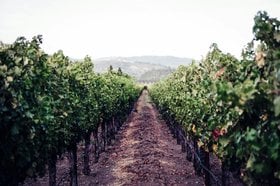
Despite its modest 48-acre size, the estate shows real terroir variance — rocky, gravelly, loam-and-clay soil, west-facing slopes that limit excessive sun exposure, and cooling breezes from San Pablo Bay. The combination produces some of the earliest-ripening fruit in Napa Valley. The estate rarely opens to visitors, which only adds to its mystique among collectors.
Investing in Screaming Eagle
Screaming Eagle has delivered some of the strongest documented returns of any American wine: the 1998 vintage rose 72% from $4,248 to $7,310 between 2021 and 2023, and a trio of magnum bottles sold for $48,600 at a 2022 Sotheby's auction. That said, as the pricing section above shows, the market has softened from its 2022 highs — a useful reminder to think in multi-year holding periods rather than expecting uninterrupted appreciation.
To add Screaming Eagle or other cult wines to a portfolio, Vinovest sources, authenticates, and stores bottles on your behalf. Sign up, complete a short questionnaire on your goals and risk tolerance, and fund your account — the current minimum is $5,000. Vinovest's annual fee is 2.5% (1.9% for portfolios over $50,000), covering authentication, insurance, bonded warehouse storage, and portfolio management.
Frequently Asked Questions
How much does a bottle of Screaming Eagle cost?
Recent-vintage Cabernet Sauvignon trades for roughly $2,500–$4,500 on the secondary market, with 100-point vintages reaching $5,000–$15,000 or more.
Why is Screaming Eagle so hard to buy?
The mailing list — the only direct-purchase channel — has been closed to new members since 2000. Nearly all buyers acquire bottles through the secondary market, auction houses, or specialist retailers instead.
Is Screaming Eagle a good investment?
It has a strong long-term track record, including a $500,000 auction sale for a single 1992 magnum, but the market has cooled since its 2022 peak. Like most cult wines, it should be treated as a multi-year hold rather than a guaranteed short-term gain.
How can I tell if a Screaming Eagle bottle is authentic?
Bottles from the 2010 vintage onward carry a bubble code with a serial number that can be verified on the official Screaming Eagle website. Buying through an established merchant, auction house, or authentication-backed platform reduces counterfeit risk further.
What other wines does Screaming Eagle make besides Cabernet Sauvignon?
The estate also produces The Flight, a Merlot-Cabernet Sauvignon blend, and a tiny-production Sauvignon Blanc that frequently trades for more than the flagship Cabernet due to its scarcity.
Last updated: July 2026 | Reviewed by the Vinovest Editorial Team | Pricing sourced from Wine-Searcher, Cult Wines market data, and current auction results. Prices are approximate and fluctuate with vintage and market conditions.